
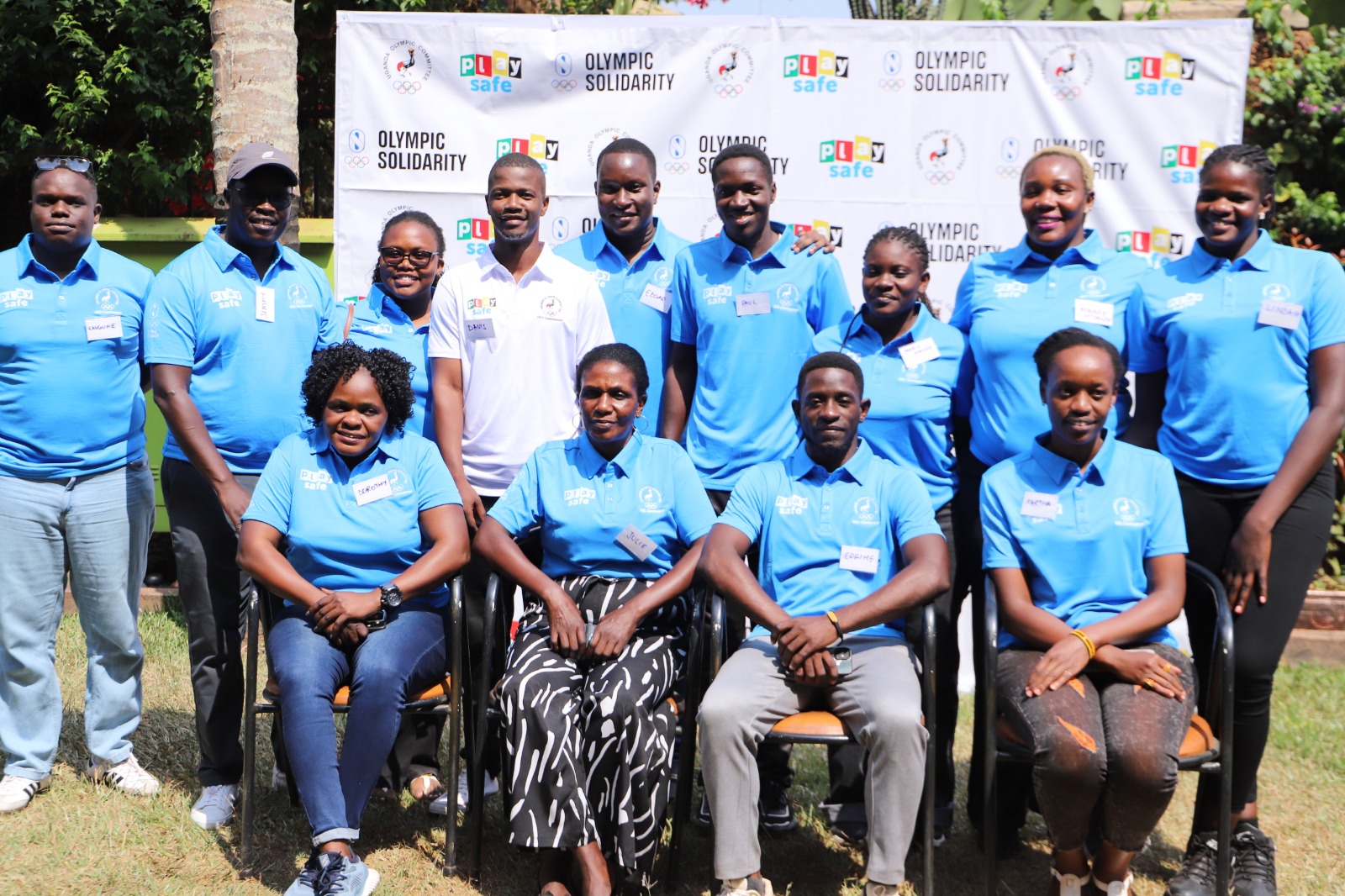
Uganda’s efforts to create safer and more inclusive sporting environments received a significant boost as national sports federations participated in the PlaySafe Safeguarding Training of Trainers (ToT) Workshop organised by the Uganda Olympic Committee’s Gender Equality and Diversity Commission (UOC-GED).
Held at Nob View Hotel in Ntinda, the workshop brought together representatives from various national federations to strengthen safeguarding practices across sports administration, domestic competitions, and national team activities. The initiative reflects a growing recognition that athlete welfare and institutional accountability are central to modern sports governance.
Among the participating organisations was Cricket Uganda, represented by Edgar Kazibwe and Maria Nyende. Their attendance underscored the federation’s ongoing commitment to embedding safeguarding principles into its structures and daily operations.
The workshop equipped participants with practical tools to implement safeguarding systems designed to prevent abuse, protect athletes and officials, establish effective reporting mechanisms, and continuously improve organisational practices. Discussions emphasised that safeguarding extends beyond policy documents, requiring a culture where every participant feels safe, respected, and supported.
For Cricket Uganda, the training builds on work already underway. The federation has been conducting internal safeguarding workshops and developing policies under the guidance of certified safeguarding trainer Cisse Musiime. Participation in the UOC programme provides an opportunity to align those efforts with nationally recognised standards, including the Four Pillars of Safeguarding—Prevent, Protect, Respond and Improve—and the UOC’s 13-Step PlaySafe Pathway.
“Safeguarding is fundamentally about building an environment where every athlete, official and participant feels safe, respected and supported,” said Edgar Kazibwe after the workshop. “Our participation in the UOC PlaySafe ToT session reinforces the ongoing work we have been doing with our trainer, Cisse Musiime. We are now taking the final steps to embed these national frameworks directly into our day-to-day operations and team protocols at Cricket Uganda.”
The workshop highlighted safeguarding as an essential component of good governance, encouraging sports organisations to prioritise athlete welfare above competitive success while maintaining zero tolerance for abuse, harassment, discrimination and other forms of harm.
Participants also explored best practices for confidential reporting, external referral pathways, and the development of inclusive, gender-responsive safeguards that protect women, girls, young athletes and persons with disabilities.
Denis Musali, Honorary Secretary of Cricket Uganda, said strengthening safeguarding remains a strategic priority for the federation.
“As an executive, institutionalising safeguarding is a top administrative priority for us. By embedding clear codes of conduct, reporting pathways and policy frameworks into our structures, we are ensuring that Cricket Uganda remains a safe, accountable and supportive environment for everyone involved in our sport,” he said.
The workshop reflects a wider movement across Uganda’s sporting sector to strengthen governance standards, protect participants, and build public confidence in sports institutions. As federations continue implementing the knowledge gained, safeguarding is expected to become an increasingly integral part of athlete development and sports administration nationwide.
Cricket Uganda will now continue finalising its tailored Safeguarding Policy, appoint safeguarding focal persons and formalise reporting mechanisms as it works alongside other national federations to advance safe sport in Uganda.